Nervous System Care in Melbourne, gentle Adjustments that upgrade your nervous system
Pulse 2 of the 3 Pulse Integration Process, the Life Upgrade.
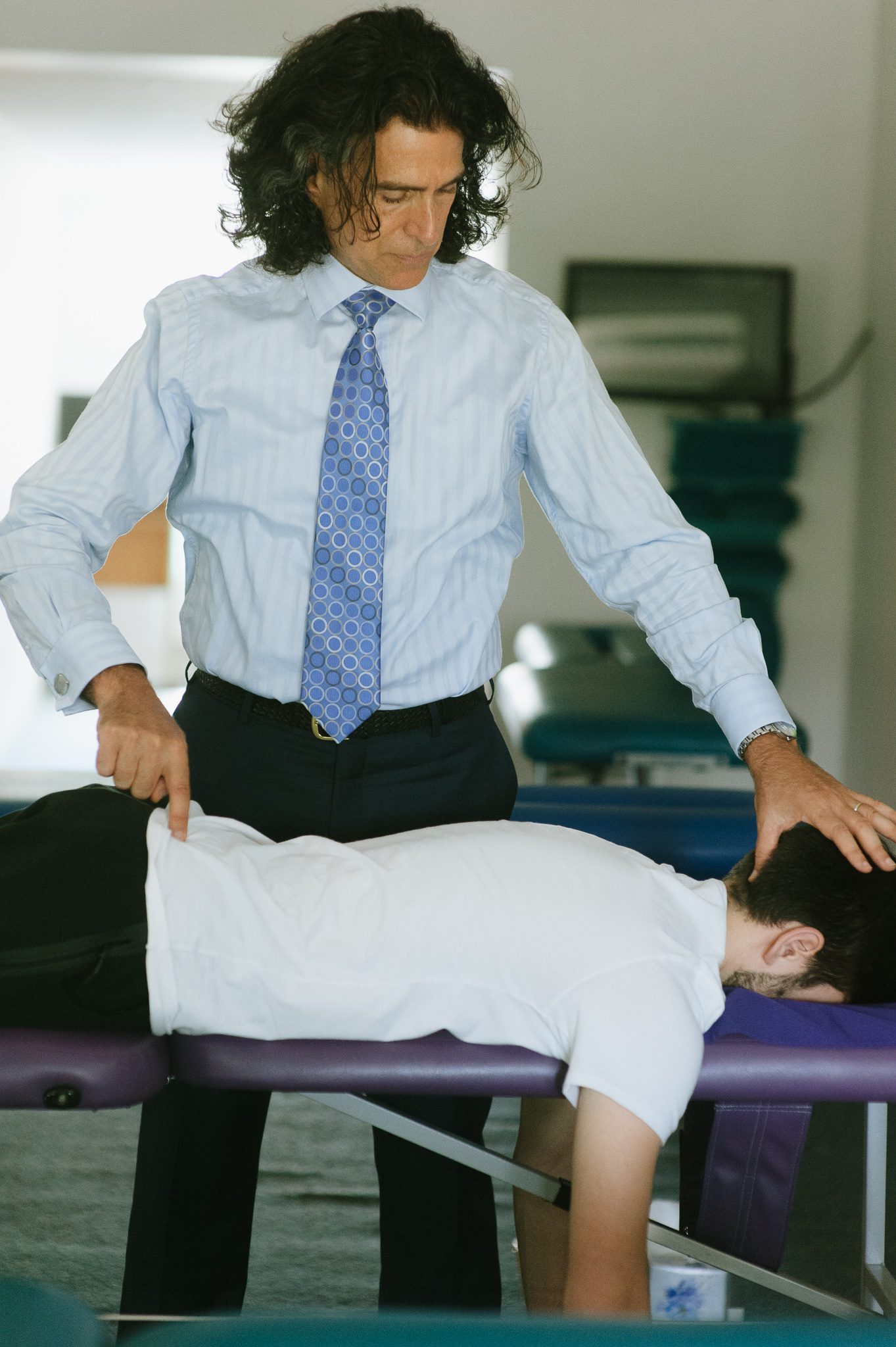
This is the care itself: gentle, brain‑based Whole‑Person Nervous System Adjustments, given by hand.
It is called an upgrade because wherever you start, in poor health or already thriving, there is room to go further.
People do not exercise only to stay out of trouble.
They exercise to be able to do more.
This is that idea, applied to the system running everything else.
A short video
Dr Ari on Nervous System Care
36 seconds · captions on
Care that cues the body, rather than forcing it.
Read how it worksTap to readHide
The work uses precise, light contacts to cue your nervous system rather than force it, so it finds its own new strategies for releasing unnecessary tension and self-regulating. Tension has its uses; what is worth letting go of is the tension that interferes, the holding that reduces what you are capable of. Nothing is pushed, and nothing is forced.
Each adjustment helps your body tune, synchronise, calibrate,
entrain, retrain and reprogram, enabling greater coherence.
The established clinical foundation underneath this work is Network Spinal. Dr Ari practises it within his own Whole-Person approach to care.
When physical, chemical and emotional stress accumulates over the years, the nervous system can get stuck in patterns of defence and tension – the body answering its conditions rather than simply following its genes, which is the ground Dr Bruce Lipton has spent his career on. The gentle contacts act like a cue – helping the brain notice where it’s holding tension and develop new, more efficient ways to organise the body, building on the well-established science of neuroplasticity: that the nervous system can learn and rewire with the right inputs over time – the principle summarised, as Dr Joe Dispenza says, “nerves that fire together, wire together.”
This is also why the contacts are light. A nervous system holding a long-standing pattern of defence, the kind laid down by years of stress or trauma, not in a single afternoon, does not hand it over to force; pressure reads as one more thing to brace against. What tends to help is the opposite: enough safety, and accurate information, for a system to notice what it is holding and find a way down of its own. Slow is not a compromise here. It is the mechanism.
We don’t treat symptoms, we don’t treat anything.
We support your body’s innate intelligence.
We don’t treat conditions, named or otherwise.
We care for people, and people arrive with or without them.
Read what the care is forTap to readHide
Nothing here is aimed at a diagnosis. What is done is deliberately small: light, precise contact offered as information your body can act on, never force it has to brace against. The intention is more focused than that, and in another sense more ambitious: to support your nervous system to do what it is already built to do.
That does not mean your symptoms are set aside. What you are experiencing is valid and valuable, and it is taken seriously: read in context, as part of a bigger picture, rather than mistaken for the whole of it.
Your body has an innate capacity to regulate, adapt, repair and organise itself. That capacity is not something we supply. It is something we work to reduce the interference to, and to support, so that your own resourcefulness, resilience and adaptability have more room to work.
Energy works the same way. Much of what people call exhaustion has less to do with how much energy they have than with how much of it is already committed, muscles held at low levels of activity for hours at a time, systems running under sustained load. That holding carries a real metabolic cost. So the intention is not to add energy from outside, but to reduce what is being spent on holding.
The aim is not to return you to an earlier version of yourself. It is to help you integrate what your body has carried, and to establish new patterns: new pathways, new potential, new opportunities.
The direction that matters is upward and forward, whatever level you begin from – that is the whole idea behind the 4 Levels of Spiraling Health
Protection belongs in that. A body that defends itself is working correctly. What the care supports is protection that fits the moment, full when it is needed, and able to stand down when it is not. Over time the intention is a greater ability to adapt, and greater resilience: recovering more readily from what life brings, rather than staying in defence longer than the situation calls for.

Done by hand.
The word Chiropractic is built from two Greek words, cheir, hand, and praktikos, done.
Done by hand.
Four decades in, that origin still describes the work exactly.
Touch isn’t incidental to the care. It is the care.
Your skin is the largest sensory organ you have, and it reports straight to your nervous system.
A hand that knows what it’s feeling for can meet that system where it actually is.
Why so light a contact does anythingTap to readHide
Most of your nervous system’s traffic runs inward – roughly 80% of the vagus nerve’s fibres carry signals up to the brain, not down from it.
A hand doesn’t need force.
It isn’t pushing against the outward stream, it’s joining the inward one.
Touch is information, and information is what a nervous system reorganises around.
Gentle hands.
A nurturing heart.
An attentive mind.
One instrument, not three separate qualities.
Dr Ari has spent more than forty years mastering it, across more than 25,000 people.
Chiropractic has always been three things at once: a science, a philosophy, and an art.
The science is what can be measured: what the testing shows, repeated over time.
The philosophy is the orientation, health as something built, not merely restored.
The art is the part no protocol holds. Where to make contact, how lightly, when to wait, when a system has had enough for one day. Judgement of that kind is not written down; it is earned, hand by hand.
The science and the philosophy can be taught. The art is what contact itself teaches, and it never stops teaching.
What a session feels like.
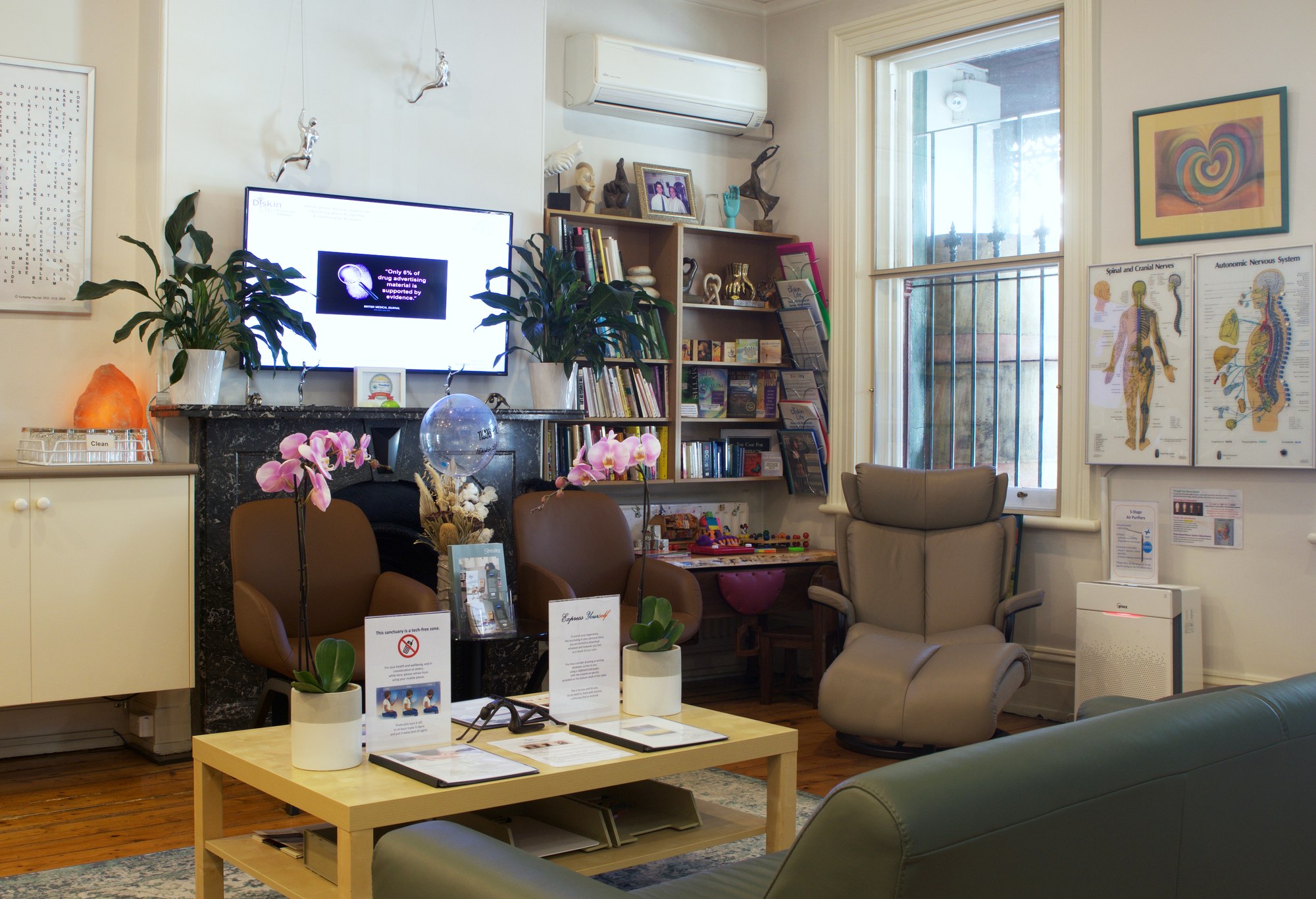
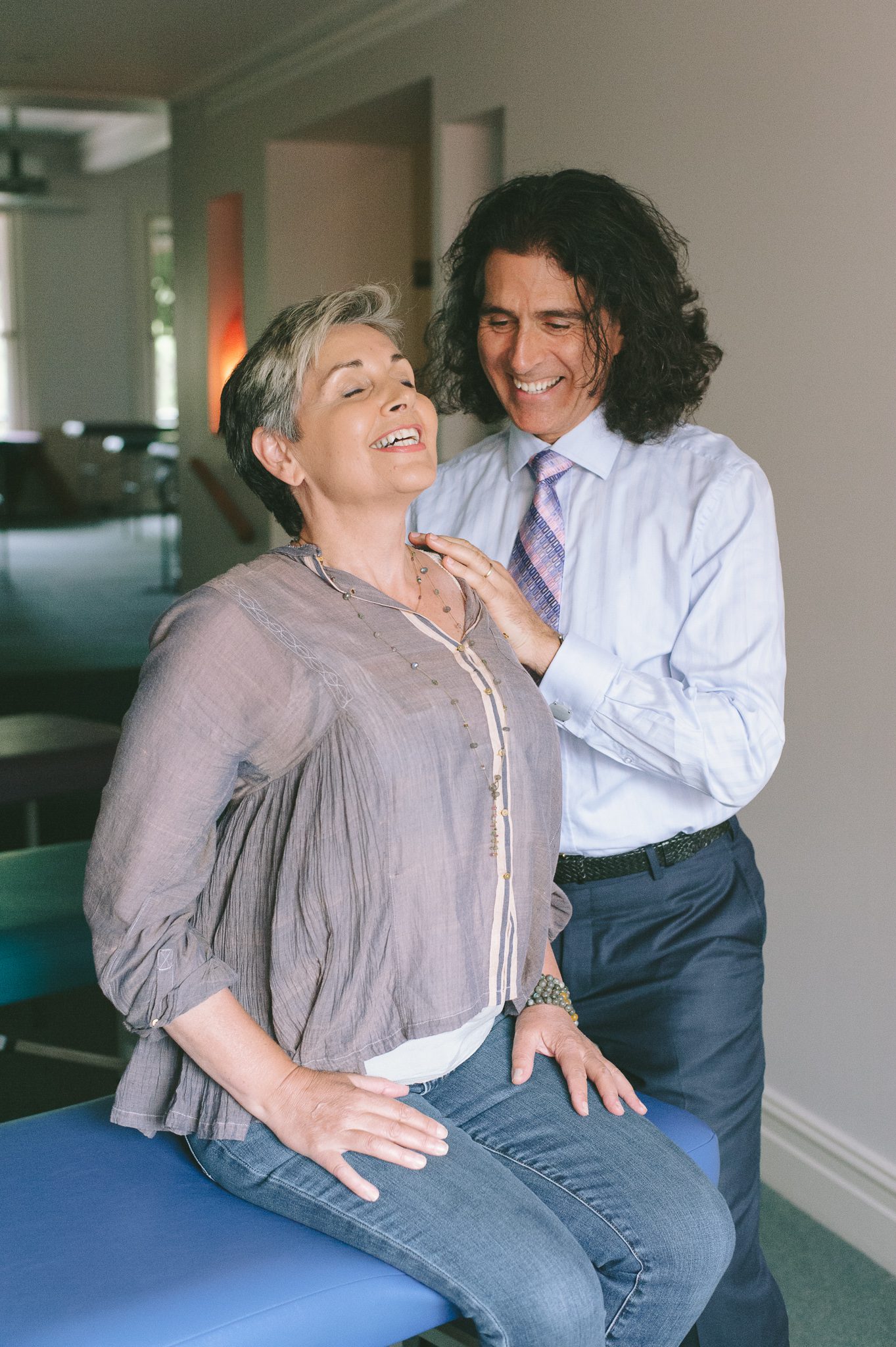
Contacts are light and specific: the intention is to cue the nervous system, not to move the spine by force, so the body does the work. What you notice during a session varies from person to person.
That quiet noticing has a name: interoception: your perception of your body’s internal signals, from heartbeat and breath to hunger, thirst and held tension. Much of this work is helping you tune back into it.
Because the inputs are gentle, it’s suitable for all ages, including children, during pregnancy, and for people with sensitive or complex health histories.
The lightest touch can shift the deepest patterns.
Built for people who want more than a quick fix.
Whether you are stuck in a stress cycle, wired but tired, or well and wanting more: that question has its own page.
What your nervous system is already running.
Feel Better·
It begins with a conversation.
- Free, and about 20 minutes
- A relaxed conversation with Dr Ari. No exam, nothing hands-on.
- No obligation, and nothing to commit to
Just a chance to sit down, be truly heard,
and see where you’re at.